SERVICE / 04
Outdoor slabs that meet the moment.
Patios, porches, and pool decks work with steps, doors, drainage, furniture, and grade. The lowest corner is only part of the story.
SITE CONTEXT
Show the edge conditions.
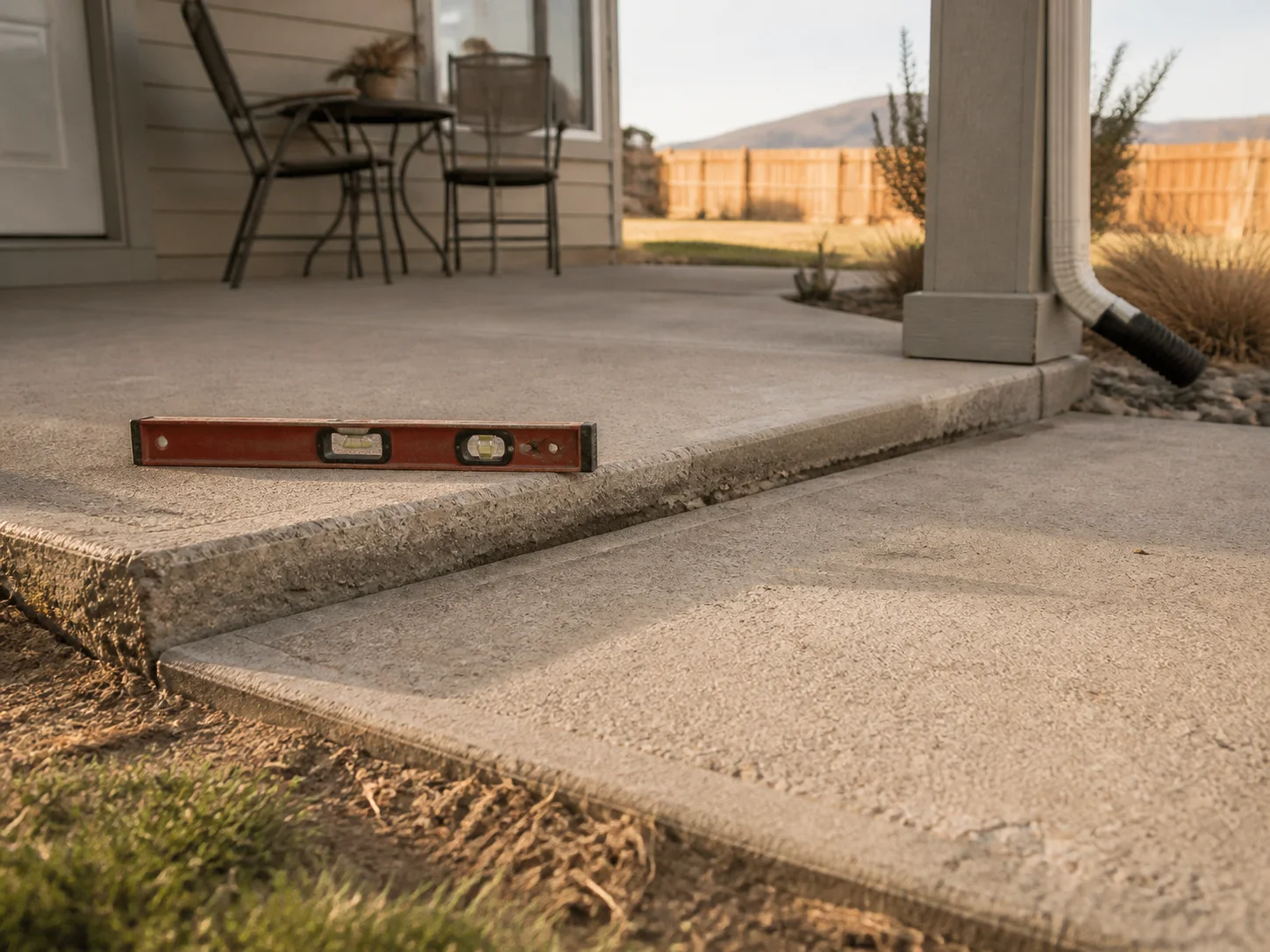
Outdoor slabs are connected to how a property is used. A patio may meet a back door, porch step, retaining edge, roof support, or pool coping line. When one section settles, the changed step height or low edge may be the first sign that something beneath the surface needs attention.
Evaluation should include the slab, nearby structures, drainage, access, and attached features. A low corner alone does not determine whether lifting is appropriate.
01 / OUTDOOR SURFACES
Function changes the question.
A settled patio may hold water near the home or make furniture rock. A porch may create a changed step into the house. A pool deck may affect the transition around the pool or create a place where water and debris collect. These are different uses even when the visible symptom is similar.
Note what the surface supports or meets. Include doors, steps, railings, posts, roofs, pool edges, furniture areas, landscaping, and drains in your photos. If the slab changed after drainage work, landscaping, construction, or a major weather event, include that history.
Useful observations
- Did a step height or door transition change?
- Where does water collect after rain?
- Are railings, walls, or attached structures involved?
- Is the slab cracked, separated, or mostly intact?
02 / OPTIONS
Bring the slab back into the plan.
Lifting may be worth evaluating when the slab is sound enough, access is practical, and surrounding conditions support the repair. Mudjacking and polyurethane/polyjacking are different methods, and the recommendation should account for material, access, voids, soil conditions, and desired finish.
Another repair may be more appropriate when the slab is heavily damaged, a structural connection has moved, drainage is unresolved, or surrounding grade needs to change. A durable plan may include sealing, grading, drainage work, replacement, or repairs to an adjoining feature.
Ask what the proposed work changes and what it does not. In particular, ask how the repair will meet steps, thresholds, pool edges, walls, or other surfaces that cannot simply be raised with the slab.
03 / PROJECT INTAKE
Photograph from the structure outward.
Take a photo from the home, porch, or pool edge looking across the slab. Add a side angle of the lowest point, a close photo of the joint, and a view of drainage or attached features. Approximate dimensions help establish the scale.
Describe how movement affects doors, steps, furniture, walking, water flow, pool use, or outdoor access. If the project is commercial or shared, include access rules, customer routes, and scheduling constraints.
You do not need to choose a method before submitting the request. The provider should review the context and explain whether leveling, another repair, or replacement fits the condition.
Describe the outdoor slab04 / RELATED QUESTIONS
Keep drainage in the conversation.
Water can collect because of the slab’s slope, a nearby downspout, a grade change, a failed joint, or a larger drainage pattern. Raising a slab may change one surface, but it does not automatically solve every source of water. Ask what the provider observed and whether related work should be planned.
Explore the rest of the site
For a general evaluation, read concrete leveling. For connected vehicle routes, see driveway leveling. For pedestrian transitions, review sidewalk leveling. Confirm coverage on the service-area map.
FAQ / OUTDOOR SLABS
Questions before the evaluation.
Can a settled patio always be lifted?
No. The slab, supporting material, drainage, access, attached structures, and cause of movement affect the recommendation.
What if a porch step changed height?
Include the step and adjoining structure in the request. The provider should evaluate the transition rather than treating the slab as an isolated panel.
Does leveling fix water near a patio?
It may change surface elevation, but drainage sources and surrounding grades should be reviewed too.
NEXT STEP